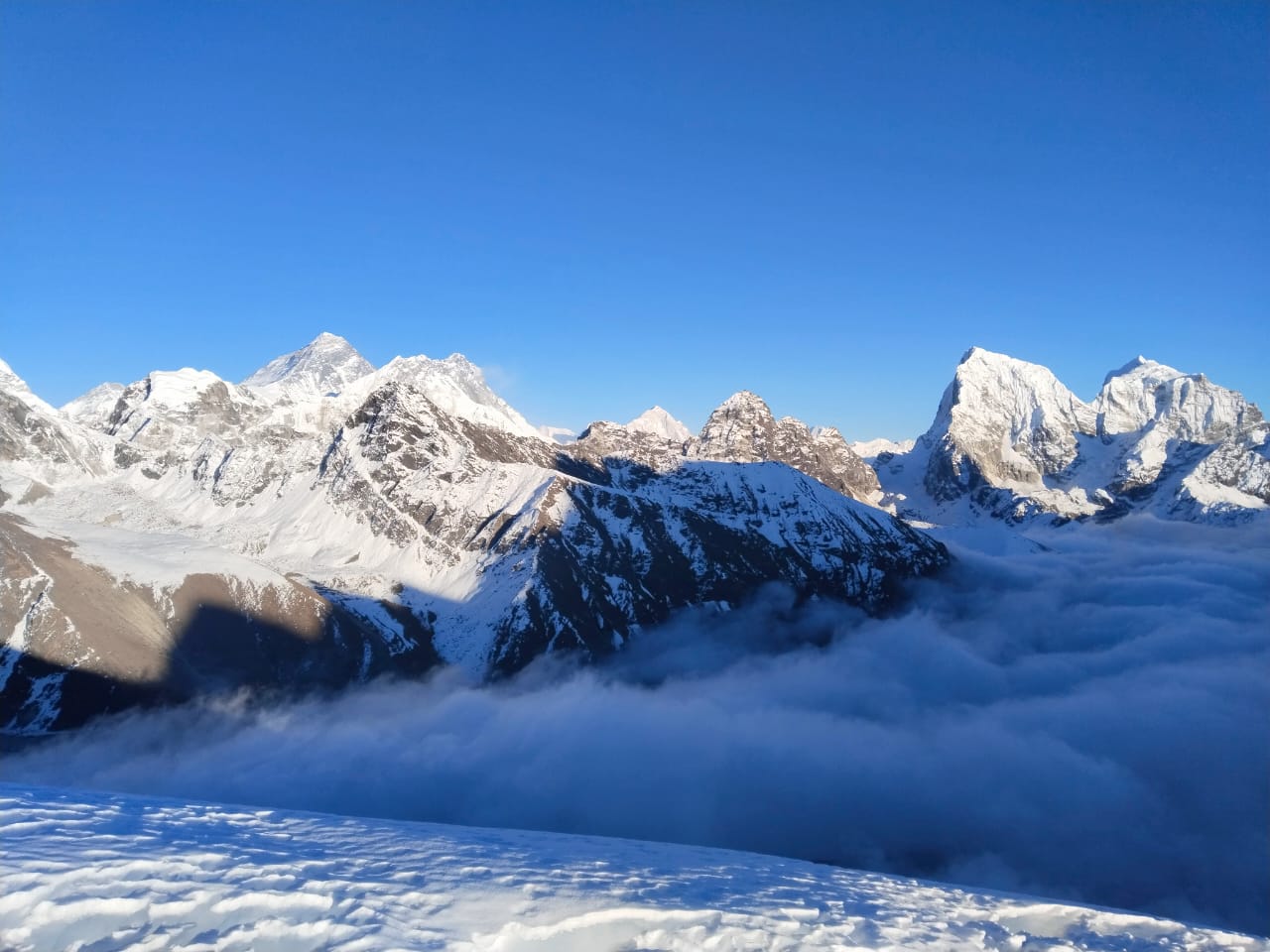
Everest Base Camp Trek for Beginners
The Everest Base Camp Trek for beginners is achievable for a reasonably fit well-prepared first-time trekker, not reserved for experienced mountaineers. The trail is non-technical, follows a teahouse-based route through the Khumbu region, and presents altitude as the dominant challenge rather than climbing skill. Everest Base Camp sits at 5,364 m while the optional Kala Patthar viewpoint reaches 5,545 m. A standard itinerary runs 12-15 days, with 9-11 of those as actual trekking days. Trekking to Everest Base Camp stays separate from technically climbing Mount Everest itself, since the trek never touches ropes, harnesses, or summit-route terrain. This guide covers difficulty, altitude, itinerary, permits, season, packing, cost, guide and porter support, safety, and the mistakes beginners make most often. Preparation, pacing, and acclimatization decide success on this trek rather than natural athleticism.
Can Beginners Really Do the Everest Base Camp Trek?
Yes, beginners can complete the Everest Base Camp Trek if they arrive physically prepared and follow a realistically paced itinerary with built-in acclimatization days. The standard route requires no technical climbing experience, no mountaineering skills, and no ropes, harnesses, or ice-climbing ability. The trek's real physical demands stay distinct from technical skill: high altitude, long consecutive walking days of 5-8 hours, cold temperatures, steep and uneven terrain, and increasingly basic facilities as elevation rises. Thousands of first-time trekkers with no prior high-altitude experience complete the route safely every season. Fitness alone does not guarantee success, since altitude tolerance, pacing discipline, and a longer, more conservative itinerary matter as much as gym fitness. Not everyone who starts finishes the trek; some trekkers turn back or require evacuation, most often from altitude illness rather than physical exhaustion. A May 2026 guest on a 15-day Sherpa Expedition & Trekking departure had her oxygen levels checked regularly by her guide throughout the ascent, with consistent monitoring for high-altitude sickness signs rather than a one-time check at departure, so her case shows what ongoing altitude monitoring looks like for a beginner on the trail. The sections below break down each of these qualifying factors in detail.

How Difficult Is the Everest Base Camp Trek for Beginners?
The Everest Base Camp Trek is rated moderate to challenging based on altitude, cumulative distance, elevation gain, terrain, and trek duration rather than technical skill. Three difficulty dimensions apply to beginners specifically: technical difficulty is low, physical and endurance difficulty is high from repeated long walking days at altitude, and mental difficulty is moderate from discomfort, fatigue, and basic living conditions. The round trip covers roughly 130 km (80 miles) with daily walking time of 5-8 hours. Beginners most often cite three sections as hardest: the Namche Bazaar ascent on day 2, which gains roughly 1,000 m; the stretch from Dingboche or Lobuche to Gorak Shep; and the pre-dawn Kala Patthar climb. Personal difficulty reports online conflict with each other because fitness, pacing, age, altitude tolerance, and itinerary length each change the lived experience. When beginners choose a rushed 10-12 day itinerary over a 14+ day one, they unintentionally increase their own difficulty and altitude-illness risk, which makes itinerary length one of the most common self-inflicted difficulty factors.
Is the Everest Base Camp Trek Technically Difficult?
The standard Everest Base Camp trek does not require ropes, harnesses, crampon-based climbing, ice axes, or glacier travel. Non-technical does not mean easy, since beginners still cover rocky, uneven, and occasionally icy ground across many consecutive days. Concrete terrain features on the route include stone steps, switchback trail sections, narrow suspension bridges, and moraine near Gorak Shep. Trekking poles, and seasonally microspikes, reduce strain and improve footing on the steeper or icier sections. Prior technical experience helps pacing comfort for beginners with limited hiking background or mild fear of heights, though it stays optional rather than a strict prerequisite.
How Does High Altitude Affect Beginner Trekkers?
High altitude ranks as the single biggest factor in how a beginner experiences the Everest Base Camp Trek. Available oxygen at Everest Base Camp measures roughly half of sea-level levels because atmospheric pressure drops with elevation. Beginners commonly notice a slower pace, breathlessness on mild inclines, disrupted sleep, reduced appetite, and headaches. General fitness does not prevent altitude illness, since a very fit beginner can still struggle while a less athletic well-acclimatized trekker does fine. Acute Mountain Sickness (AMS) carries common early symptoms: persistent headache, nausea or vomiting, dizziness, fatigue, and poor sleep. The "climb high sleep low" principle explains why rest days at Namche Bazaar and Dingboche stay built into beginner-friendly itineraries. The standard elevation progression moves through Lukla, Namche Bazaar, Tengboche, Dingboche, Lobuche, Gorak Shep, Everest Base Camp, and Kala Patthar so exposure increases stepwise rather than all at once. When symptoms worsen, the immediate response calls for stopping the ascent, resting, and descending if symptoms do not improve, since severe cases can progress toward HAPE or HACE. Food choice forms a practical part of this monitoring too, because Sherpa Expedition & Trekking guides advise clients on which teahouse dishes provide the most trekking energy while reducing gastrointestinal distress, and digestive upset at altitude complicates reading genuine AMS symptoms. This guide keeps altitude-illness coverage at an introductory level, since full AMS/HACE/HAPE triage and medication protocols sit outside its scope.
How Long Does the Everest Base Camp Trek Take?
Most Everest Base Camp itineraries for beginners take 12-15 days including Kathmandu arrival and departure, with 9-11 of those as actual trekking days. Beginners specifically benefit from the longer end of that range, since 14+ days add acclimatization time and lower altitude-illness risk compared with a compressed 10-12 day version. Duration connects directly to difficulty: more days at altitude add cumulative fatigue but produce meaningfully better altitude adaptation. A helicopter flight from Gorak Shep or Lobuche shortens only the return leg, since it does not remove the demanding acclimatization-paced ascent. When beginners rush an itinerary to save time or cost, they raise their own risk without realizing it, which makes rushing one of the more common beginner mistakes. Weather can extend a fixed itinerary on its own too: a Sherpa Expedition & Trekking group finishing their 15-day trek in May 2026 had their Lukla-to-Kathmandu flight delayed over a day, so the operator arranged a helicopter transfer to Kathmandu and the group made their international connection on time, which is why beginners build buffer days into a fixed itinerary rather than booking international flights the same day as the return from Lukla.
What Does a Beginner's Everest Base Camp Itinerary Look Like?
A typical Everest Base Camp itinerary for beginners on a 15-day Sherpa Expedition & Trekking departure follows this progression:
- Arrive in Kathmandu, hotel transfer
- Kathmandu Valley cultural day tour
- Fly Kathmandu to Lukla, trek to Phakding
- Trek Phakding to Namche Bazaar
- Acclimatization day in Namche Bazaar, with a hike to Everest View Hotel (3,880 m)
- Trek Namche Bazaar to Tengboche
- Trek Tengboche to Dingboche
- Acclimatization day in Dingboche, with a hike to Nangkartshang Viewpoint (5,083 m)
- Trek Dingboche to Lobuche
- Trek Lobuche to Gorak Shep, then to Everest Base Camp and back to Gorak Shep
- Pre-dawn climb to Kala Patthar, then descend to Pheriche
- Trek Pheriche to Namche Bazaar
- Trek Namche Bazaar to Lukla
- Fly Lukla to Kathmandu
- Departure from Kathmandu
The two standard acclimatization stops, Namche Bazaar and Dingboche, involve a named acclimatization hike rather than full rest: Everest View Hotel and Nangkartshang Viewpoint respectively, each a short out-and-back from the overnight stop. Realistic daily distances and walking hours per stage let beginners plan energy and pacing rather than reading only a place-name list. The itinerary's hardest single day for beginners is the Gorak Shep-to-Base-Camp-and-back day, often 7-8 hours, sometimes followed the next morning by the pre-dawn Kala Patthar climb. The return trip carries real difficulty too, since long descent days place real load on knees and stamina after Base Camp is already reached. Because the itinerary builds in the Kathmandu Valley day tour and a same-city Kathmandu arrival day at each end, a beginner's fixed international flights get more slack to absorb a Lukla weather delay than a compressed itinerary would allow. Sherpa Expedition & Trekking's 15-day EBC itinerary opens with this Kathmandu Valley day tour before the flight to Lukla, so first-time visitors get a cultural orientation to Nepal alongside the trek itself, the same trip structure behind the couple's May 2026 review of the company's guiding and Kathmandu tour.
What Permits Do Beginners Need for the Everest Base Camp Trek?
Beginners need two permits for the Everest Base Camp Trek:
- Khumbu Pasang Lhamu Rural Municipality Entry Permit: obtainable in Lukla or at Monjo, not available in Kathmandu
- Sagarmatha National Park Entry Permit: obtainable in Kathmandu or at the park entrance near Monjo
A guided package typically bundles both permits into the package price. When an agency handles permits, the paperwork burden lifts from a beginner managing their first Himalayan trip independently. Permit rules and fees change periodically, so a beginner confirms current requirements with their operator or the Nepal Tourism Board shortly before departure rather than relying on an older article. This section covers permits at the level a first-timer needs to budget and plan rather than a full checkpoint-by-checkpoint compliance manual.
What Is the Best Season for Beginners to Trek to Everest Base Camp?
Spring and autumn stand as the safer more predictable windows for beginners trekking to Everest Base Camp.
| Season | Months | Conditions for Beginners |
|---|---|---|
| Spring | March-May | Stable weather, clear mountain views, reliable Lukla flights, blooming rhododendrons |
| Autumn | September-November | Stable weather, clearest mountain views, reliable Lukla flights, busiest trail season |
| Monsoon | June-August | Muddy, slippery trails, landslide risk, leeches at lower elevation, higher flight-delay chance |
| Winter | December-February | Sub-zero night temperatures down to roughly -15°C to -20°C at Gorak Shep, possible snow on trail, some higher teahouses closed, fewer crowds, clearer daytime views |
Spring and autumn earn their beginner recommendation from stable weather, clearer mountain views, and more reliable Lukla flights. Monsoon season raises beginner-specific risks: muddy, slippery trails, landslide risk, leeches at lower elevation, and a higher chance of flight delay. Winter's specific beginner risks include sub-zero night temperatures, possible snow on the trail, and some higher teahouses closing, though fewer crowds and clearer daytime views offset those risks. Spring and autumn carry their own trade-off too, since better weather brings heavier trail and teahouse crowding and occasionally means dormitory-style rooms in peak weeks. Season choice connects directly to Lukla flight reliability, because poor visibility remains the most common cause of delay or cancellation even in spring, as the Lukla flight delay a Sherpa Expedition & Trekking group experienced after finishing their May 2026 trek reflects.
What Should Beginners Pack for the Everest Base Camp Trek?
The essential Everest Base Camp packing list for beginners includes:
- Base layer: a moisture-wicking layer worn against the skin
- Mid layer: fleece or down insulation
- Outer shell: a waterproof windproof jacket
- Footwear: waterproof trekking boots with ankle support, bought and broken in well before departure
- Sleeping bag: rated to roughly -15°C to -20°C, since teahouse blankets alone stay insufficient at higher elevation
- Cold-weather accessories: a warm hat, gloves, and a buff
- Trekking poles: reduce knee strain on descents and improve footing on uneven terrain
- Headlamp: required for the pre-dawn Kala Patthar climb and teahouse use after dark
- Sun protection: sunglasses with strong UV protection and high-SPF sunscreen
- Water treatment: purification tablets or a filter bottle
- First-aid kit: basic medication for headaches, blisters, and digestive upset
Daypack-versus-porter-duffel planning splits gear into a light daypack of 25-30 L for daily essentials while a porter carries the main duffel, typically capped around 15-20 kg. Bulkier or infrequently reused items such as down jackets, sleeping bags, and trekking poles stay rentable in Kathmandu, Lukla, or Namche, while boots, socks, and personal medicine need buying and breaking in beforehand. The most common beginner packing mistake stays overpacking clothing and food that teahouses already provide.
How Much Does the Everest Base Camp Trek Cost for Beginners?
The Everest Base Camp Trek costs beginners roughly US$1,200-5,000+ for a 12-14 day guided trek depending on package tier.
| Package Tier | Price Range (USD) | What It Includes |
|---|---|---|
| Budget group trek | $1,200-1,600 | Domestic flights, permits, guide, porter, teahouse lodging, trek meals |
| Standard guided package | $1,400-2,200 | Same as above, with smaller group sizes or added comfort |
| Premium/luxury trek | $2,500-5,000+ | Same as above, plus upgraded lodges and optional helicopter return |
Major individual cost components let a beginner sanity-check a package quote: the Lukla round-trip flight runs roughly $180-220 each way in most seasons, the two required permits cost roughly $40-45 combined, teahouse food and lodging runs roughly $35-50 per day, and guide and porter fees run roughly $35-60 per day combined. A standard guided package typically includes domestic flights, permits, guide, porter, teahouse accommodation, and trek meals. Commonly excluded costs that need their own line in a beginner's budget include international flights, travel insurance, gear purchase or rental, hot showers, Wi-Fi, device charging, snacks, bottled drinks, and tips. Because prices rise noticeably with altitude, beginners set aside an additional $300-600 in trail cash for these daily extras. When a package prices unusually cheap, it more often cuts acclimatization days, guide qualifications, or porter welfare standards rather than genuinely offering better value.
Do Beginners Need a Guide or Porter for Everest Base Camp?
Hiring a guide and porter stands as standard practice for beginners on the Everest Base Camp Trek. A porter typically carries the bulk of a trekker's luggage, commonly one porter per one or two trekkers, so the beginner carries only a light daypack. A guide adds pacing management, communication with teahouses, monitoring for early altitude-illness symptoms, and coordination of emergency response beyond simple navigation. Independent trekking, small-group guided trekking, and private guide arrangements each offer a different balance of cost, flexibility, and support. When a beginner carries a full pack personally, physical difficulty increases noticeably compared with porter-supported trekking, which matters more for a beginner's stamina budget than for an experienced trekker's. Group size and guide-to-client ratio affect how much individual pacing flexibility a beginner gets on the trail. A couple who trekked with Sherpa Expedition & Trekking in May 2026 described their porter's daily care with their duffel bags across every village on the route, along with their guide's attentiveness to their safety around mules, porters, and dzopkyos on the narrow trail sections, which gives a concrete example of what a guide's and porter's daily role looks like beyond simply leading the way.
Is a Licensed Guide Legally Required for the Everest Base Camp Trek?
Nepal's current trekking regulations require most restricted and popular trekking routes, including the Khumbu region, to be accompanied by a licensed guide and to carry the agency-issued permit documentation this requires. This rule changes independent fully self-guided trekking on the classic route for beginners and experienced trekkers alike rather than staying only a beginner-specific safety suggestion. Because trekking regulations undergo periodic review, beginners confirm the current rule directly with a licensed local operator or the Nepal Tourism Board before departure. For beginners specifically, the requirement removes the decision of whether to hire support and folds guide costs into standard package pricing.
What Is Accommodation and Food Like for Beginners on the Trek?
Beginners stay in teahouses that operate as simple family-run lodges with twin rooms, basic beds and blankets, and a shared stove-heated dining hall. Bathrooms stay more often shared and squat-style at higher elevations, and hot showers and Wi-Fi typically cost extra and get more expensive with altitude. Bedrooms stay usually unheated even where the dining hall has a stove, which affects sleep quality and reinforces the sleeping-bag guidance covered in the packing section. Typical food available includes dal bhat (rice, lentils, and vegetables, often with free refills) plus fried rice, noodles, pasta, soups, and breakfast items like porridge, eggs, and pancakes. Leaning vegetarian above Namche Bazaar makes sense specifically because meat travels up without reliable refrigeration. Daily hydration guidance runs roughly 3-4 liters of water, drawn from boiled teahouse water, purification tablets, or a filter bottle, since bottled water gets expensive and adds plastic waste at altitude. A guide's food advice matters beyond taste at altitude too: guiding clients toward dishes that sustain trekking energy while avoiding gastrointestinal distress stays a standard part of daily route management on a Sherpa Expedition & Trekking departure.
Is the Everest Base Camp Trek Safe for Beginners?
The Everest Base Camp Trek stays safe for beginners when the itinerary allows proper acclimatization and the trekker reports symptoms honestly. The trail itself does not count as especially dangerous under normal conditions, since altitude illness remains the trek's primary safety concern for beginners. A well-paced itinerary with built-in acclimatization days stands as the single biggest controllable factor in reducing risk for a first-timer. Other real but manageable risk factors include Lukla flight disruption, cold exposure, gastrointestinal illness from food or water, and trail hazards like suspension bridges or icy sections. Travel insurance covering high-altitude trekking and helicopter evacuation up to at least 6,000 m stays standard non-negotiable practice. A reputable licensed operator, adherence to the guide's pacing, and early honest symptom reporting are the behaviors that make the trek safe for a beginner in practice. A May 2026 Sherpa Expedition & Trekking departure demonstrated this in two separate situations: during the ascent, the guide checked oxygen levels regularly and watched for high-altitude sickness signs throughout, and after the trek finished, a Lukla flight delay of over a day was resolved when the operator arranged a helicopter transfer to Kathmandu so the group's international flight connection stayed safe. This section keeps coverage at the level a first-timer needs before booking, since detailed evacuation procedures and a full hazard-by-hazard breakdown sit outside its scope.
What Common Mistakes Do Beginner Trekkers Make?
The most common mistakes beginners make on the Everest Base Camp Trek are:
- Walking too fast for the altitude instead of matching the slow steady pace that acclimatization requires, known locally as "bistari bistari"
- Ignoring early altitude-sickness symptoms and continuing to ascend rather than resting or descending
- Choosing a compressed 10-12 day itinerary to save time or money instead of the safer 14+ day version
- Overpacking clothing and gear that teahouses already provide, which adds unnecessary daypack or porter-duffel weight
- Skipping physical training beforehand and arriving with no walking-specific conditioning
- Wearing brand-new unbroken-in boots on the trek itself, which risks blisters that compound daily fatigue
- Underestimating how cold teahouse bedrooms get and under-packing for nighttime temperatures
What Cultural Etiquette Should Beginners Know on the Trail?
Respecting Sherpa culture on the Everest Base Camp Trek means understanding the Khumbu region as Sherpa homeland, shaped by Buddhism, mountaineering heritage, and monastery life, with Tengboche Monastery standing as a major cultural stop on the standard route. Beginner-relevant etiquette includes greeting with "Namaste," removing shoes and walking clockwise around monasteries and mani stones, and asking permission before photographing monks or locals. Practical trail etiquette that beginners specifically need includes standing on the mountainside rather than the drop-off side when yaks, mules, dzopkyos, or porters pass, and not wasting food in teahouses where porters carry in every supply. A Kathmandu Valley cultural day tour, run ahead of the trek itself on some packages, gives first-time visitors grounding in Nepali culture, history, and religion before they reach the Khumbu. Cultural engagement forms part of what makes the trek rewarding beyond reaching Base Camp itself rather than staying a separate obligation from the trekking experience.
Beginner-Specific Questions About the Everest Base Camp Trek
Beginners planning this trek also commonly ask a set of closely related questions, each covered in full in its own dedicated guide on this site. The answers below give a direct quick response rather than repeating material already covered above, with each one pointing to a fuller standalone guide for readers who match that specific situation.
Is the Everest Base Camp Trek Suitable for Kids?
Children can trek to Everest Base Camp when their individual stamina, cold tolerance, and prior hiking exposure support it, since suitability depends on the child rather than age alone, and itinerary pacing usually needs to slow further with children along.
Can Seniors Trek to Everest Base Camp?
Seniors can trek to Everest Base Camp provided they carry functional fitness and follow gradual acclimatization; trekkers well into their 60s and 70s regularly complete the trek because fitness and pacing matter more than age itself.
Is There an Age Limit for the Everest Base Camp Trek?
There is no official age limit for the standard Everest Base Camp Trek, though some operators set their own minimum-age policy for guided departures.
What Is the Everest Base Camp Trek Success Rate?
Most guided Everest Base Camp itineraries report a success rate in the roughly 90-95% range because itinerary length and acclimatization days count as the main factors behind it.
How Should Beginners Train and Prepare for the Trek?
Preparing for the Everest Base Camp Trek as a beginner starts 8-12 weeks out and combines cardiovascular endurance, leg strength, and loaded-daypack hiking, with a comfortable 5-6 hour hike on varied terrain serving as a good readiness benchmark.
Do Beginners Need Vaccinations for the Everest Base Camp Trek?
Recommended vaccinations for the Everest Base Camp Trek typically include routine and travel-specific vaccines from a travel clinic, since no vaccination is officially mandated for entry to Nepal for most nationalities.
What Is the 2pm Rule on Everest?
The 2pm rule on Everest is a summit-day turnaround guideline used on Mount Everest climbing expeditions: climbers must turn back by 2:00 PM regardless of proximity to the summit, because turning back avoids descending in the dark or worsening afternoon weather. This rule applies to technical Everest summit attempts rather than the standard Everest Base Camp trek, since the trek never approaches summit-day terrain or timing. See the full Difficulty guide for the complete comparison between trekking to Base Camp and climbing Everest itself.
About the Author
