
How Much Does the Everest Base Camp Trek Cost for Indian Trekkers?
The Everest Base Camp Trek costs Indian trekkers roughly ₹75,000 to ₹1,10,000 per person for a standard 12–14 days guided trek when joining a scheduled group departure. A fully private, custom-dated solo itinerary with a dedicated guide and porter can rise to around ₹1,30,000–₹1,60,000+. These figures represent the Nepal-side trek package rather than the complete India-to-India trip cost.
The final budget becomes higher after adding flights from India to Kathmandu, travel insurance, trekking gear, tips, and personal spending. Indian citizens benefit from visa-free entry and the SAARC rate for the Sagarmatha National Park permit, while most trek-service costs such as accommodation, meals, guiding, and porter services are broadly similar across nationalities. Prices also vary by group size, service level, season, and package inclusions.
Everest Base Camp Trek Cost for Indians at a Glance
A standard Everest Base Camp Trek package for Indian trekkers costs between ₹75,000 and ₹2,70,000 depending on whether the trek is booked as a budget group departure, a smaller comfort-oriented group, or a private/luxury itinerary with an optional helicopter return.
| Trek Style | Indicative Nepal-Side Package Cost | Typical Position |
| Budget / Scheduled Group | ₹75,000–₹1,10,000 | Standard guided trek with shared logistics |
| Comfort / Small Group | ₹1,25,000–₹1,55,000 | Smaller group, stronger hotel/service inclusions |
| Luxury / Private | ₹2,00,000–₹2,70,000 | Private services with premium options; helicopter return may be offered |
These are Nepal-side package figures before international travel from India is added. A complete India-to-India trip requires additional budget for international flights, insurance, equipment, tips, and personal trail spending.
Published prices for a comparable 12–14 days group itinerary can range from around ₹70,000 to above ₹1,10,000. The difference is usually caused by inclusions rather than by a simple discount. One package may include Lukla flights, permits, full-board meals, guide and porter support, while another may remove one or more of those components.
For that reason, the inclusion list is more useful than the headline price alone. International airfare to Kathmandu, tips, personal trail expenses, and some pre- or post-trek services are commonly outside the advertised Nepal-side package price.

Everest Base Camp Trek Cost for Indians by Group Size
Per-person Everest Base Camp Trek cost for Indian trekkers falls as group size grows because guide services, porter allocation, transfers, and other trip-level operating costs can be divided among more trekkers.
| Group Arrangement | Indicative Cost Per Person |
| Solo traveller joining an existing scheduled departure | ₹95,000–₹1,05,000 |
| Group of 2–6 | ₹75,000–₹93,000 |
| Group of 7+ | ₹68,000–₹83,000 |
| Fully private solo departure | ₹1,30,000–₹1,60,000+ |
A solo traveller joining an existing departure and a traveller booking a fully private solo trek are two different products. The first shares logistics with other trekkers, while the second usually has custom dates, dedicated support, and substantially less cost sharing.
For a comparable itinerary, the gap between a fully private solo trek and a larger group can therefore exceed ₹50,000 per person. Exact tiers differ between operators, and some of the lowest advertised prices only apply when a minimum number of people book together.
A solo traveller should therefore confirm whether the published rate is a true one-person rate or assumes that the traveller will join an existing scheduled group.
What Does an Everest Base Camp Trek Package for Indians Include?
A typical Everest Base Camp Trek package for Indian trekkers includes the core transport, trekking permits, accommodation, meals, and guide support required for the standard Lukla-route itinerary.
| Commonly Included | Sometimes Included |
| Kathmandu or Ramechhap–Lukla return flights | 1–2 Kathmandu hotel nights |
| Sagarmatha National Park permit | Airport transfers |
| Khumbu Pasang Lhamu Trek-Card | Farewell dinner |
| TIMS processing where applicable to the package | Trip-completion certificate |
| Teahouse accommodation during the trek | Loan sleeping bag |
| Breakfast, lunch, and dinner during trekking days | Loan down jacket |
| Licensed English- or Hindi-speaking guide | Duffel bag |
| Porter service on many packages | First-aid kit and oximeter |
Porter arrangements vary. Some packages include one porter between two trekkers, while others offer porter support as an additional paid service.
Several Indian-focused packages also advertise Hindi-speaking guides and familiar vegetarian or Indian-style meal choices as service advantages. These should not be assumed to be standard across every operator.
The most reliable way to compare two packages is to examine exactly what each price contains. A lower headline price can become more expensive once Lukla flights, porter support, meals, permits, or Kathmandu services are added separately.
What Costs Are Excluded From an Everest Base Camp Trek Package for Indians?
Everest Base Camp Trek packages for Indian trekkers commonly exclude international airfare, travel insurance, personal gear, staff tips, and day-to-day personal expenses on the trekking route.
| Common Exclusion | Indicative Cost Effect |
| India–Kathmandu return airfare | Depends on departure city and travel dates |
| Travel insurance | Additional policy cost |
| Personal trekking equipment | Depends on buying vs renting |
| Guide and porter tips | Paid separately |
| Wi-Fi, charging, showers | Part of daily miscellaneous spend |
| Bottled water, snacks, drinks | Paid directly on the trail |
| Kathmandu lunch and dinner | Often outside trek-day full board |
| Porter if not bundled | Around ₹10,000–₹12,000 for some full-trek add-ons |
Hidden and incidental expenses such as Wi-Fi, device charging, and hot showers can together add roughly ₹15,000–₹20,000 across a 12–14-day trek, depending on usage.
Kathmandu meals are another common source of confusion. A package described as “full board” often refers specifically to breakfast, lunch, and dinner during trekking days rather than every meal from airport arrival until departure.
A fixed miscellaneous budget is therefore more practical than treating every shower, drink, charging session, or snack as an isolated purchase.
Do Indian Citizens Need a Visa for the Everest Base Camp Trek?
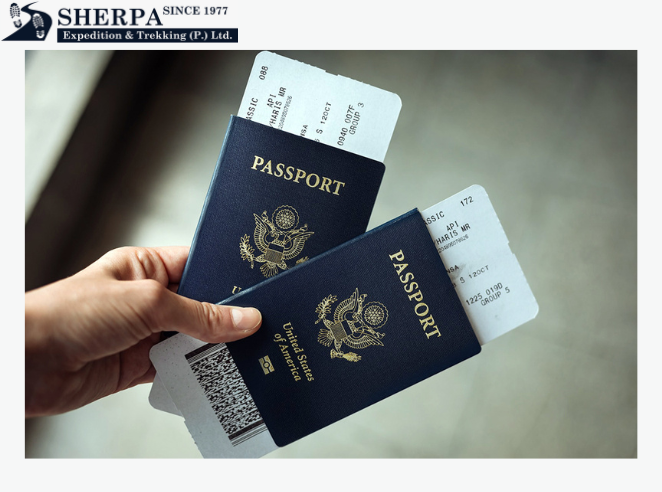
Indian citizens do not need a visa to trek to Everest Base Camp or to enter Nepal for a normal tourist visit.
For the standard adult traveller, the relevant entry documents are a valid Indian passport or an original Election Commission of India Voter ID card. Aadhaar, PAN cards, driving licences, scanned copies, and digital copies should not be treated as standalone substitutes for the standard adult entry-document requirement.
Visa cost for Indian citizens: ₹0.
This removes both the Nepal tourist-visa charge and the normal visa-on-arrival procedure faced by many other international visitors. Most non-Indian foreign tourists pay a visa fee commonly falling in the ₹ 3000–5000 range depending on the permitted stay.
The visa exemption is separate from trekking permits. Indian citizens still need the required Everest-region trekking permits and registration documents.
Travellers should carry the physical original passport or Voter ID throughout the journey. Separate provisions can apply to specific categories such as minors or senior citizens, so travellers outside the standard adult case should confirm their documentation requirements before departure.
Permit Costs for Indian Trekkers on the Everest Base Camp Trek
Indian trekkers pay three mandatory charges for the standard Everest Base Camp route, totalling about NPR 4,500, or roughly ₹2,800 combined.
| Permit / Registration | Indian / SAARC Rate | Other Foreign Rate |
| Sagarmatha National Park Entry Permit | NPR 1,500 | NPR 3,000 |
| Khumbu Pasang Lhamu Trek-Card | NPR 2,000 | NPR 3,000 for most other foreign nationals |
| NPR 1,000 | NPR 2,000 | |
| Indian total | NPR 4,500 | — |
Indian citizens qualify for the SAARC rate for Sagarmatha National Park. The Khumbu Pasang Lhamu Rural Municipality Trek-Card is also nationality-priced, with the Indian/SAARC rate currently below the standard non-SAARC foreign rate.
The TIMS Card is a separate charge. Current Nepal Tourism Board guidance lists the Everest Base Camp Trek among the routes operating under the licensed-guide and trekking-agency-issued TIMS system.
This matters because some older EBC cost guides describe the TIMS Card as having been replaced entirely by the Khumbu municipality permit. The current framework treats the Khumbu Trek-Card and TIMS as separate requirements.
For travellers booking a normal guided package, these charges are commonly processed by the trekking agency. Travellers arranging parts of the trip separately still need to follow the current licensed-guide and agency-issued TIMS framework rather than assuming all documents can be obtained independently at trail checkpoints.
Everest Base Camp Trek Cost for Indians Compared With Other Nationalities
The Everest Base Camp Trek costs Indian trekkers less than most other foreign nationalities on two specific line items that are immediately visible in the trip budget: Nepal entry and the Sagarmatha National Park permit.
Indian citizens pay no Nepal tourist-visa fee and qualify for the SAARC Sagarmatha rate of NPR 1,500 rather than the NPR 3,000 charged to non-SAARC foreign trekkers. Other government-administered charges, including TIMS and the Khumbu Trek-Card, can also vary by nationality.
| Cost Component | Indian / SAARC | Nepali | Non-SAARC Foreigner |
| Nepal tourist visa | ₹0 | Not applicable | Visa fee applies |
| Sagarmatha National Park | NPR 1,500 | Lower domestic rate | NPR 3,000 |
| Khumbu Trek-Card | SAARC rate | Local rate may differ | Standard foreign rate |
| TIMS | SAARC rate | Domestic structure differs | Standard foreign rate |
| Accommodation and meals | Market rate | Market rate | Market rate |
| Guide services | Market/service rate | Market/service rate | Market/service rate |
| Lukla flight | Foreign/SAARC fare structure | Lower domestic fare | Foreign fare structure |
Most trek-service costs are not inherently nationality-priced. A room, meal, guide service, or rented jacket generally does not become cheaper simply because the customer holds an Indian passport.
The phrase “Everest Base Camp is cheaper for Indians” therefore mainly reflects visa, permit, registration, and selected transport advantages rather than a blanket discount on the entire trek.
Flight Costs for Indian Trekkers to Reach the Everest Base Camp Trailhead
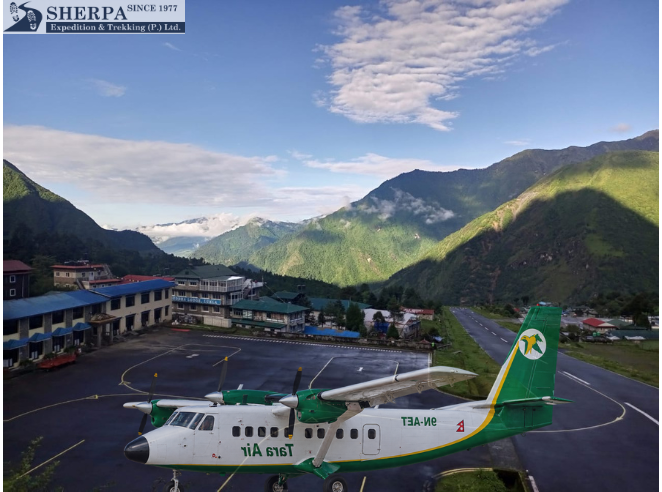
Indian trekkers pay two sets of flight costs to reach the Everest Base Camp trailhead: travel from India to Kathmandu and the separate mountain flight from Kathmandu or Ramechhap to Lukla.
| Departure / Sector | Indicative Return or Sector Cost |
| Delhi–Kathmandu return | ₹6,000–₹16,000 |
| Mumbai–Kathmandu return | ₹9,000–₹22,000 |
| Kolkata–Kathmandu return | ₹5,000–₹12,000 |
| Bengaluru / Chennai–Kathmandu return | ₹10,000–₹26,000 |
| Kathmandu–Lukla one way | ₹ 15500–25000 |
| Kathmandu–Lukla return | ₹ 31000–48000 |
Delhi and Kolkata generally provide some of the lower and more frequent India–Kathmandu connections, while travellers beginning in Mumbai, Bengaluru, or Chennai can face a higher international airfare component.
The Lukla flight is a separate roughly 30–35-minute mountain sector. In guided packages, this domestic flight is often already included in the Nepal-side package price.
During the March–May and September–November peak trekking seasons, Lukla operations are frequently routed through Ramechhap/Manthali rather than Kathmandu. This can add a road journey of roughly four to five hours before the mountain flight.
Weather disruption is another financial factor. Lukla delays can create extra hotel, food, and flight-rebooking costs, so keeping at least one buffer day before the international return flight reduces the risk of one delayed mountain sector affecting the entire journey home.
Guide Cost for Indian Trekkers on the Everest Base Camp Trek
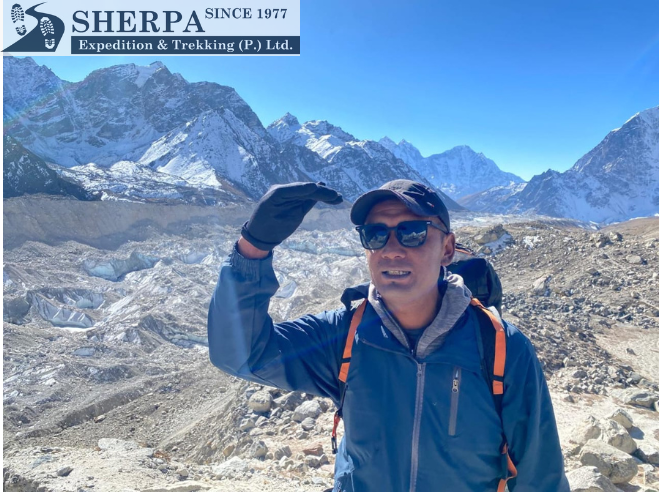
A licensed trekking guide for the Everest Base Camp Trek costs roughly ₹ 2500–4000 per day as a guide-service component, with some Kathmandu-based pricing commonly shown around ₹2,000–₹3,000 per day.
Most standard guided packages already include the guide cost, so package trekkers normally do not pay this as a separate daily bill.
Indian-focused operators sometimes offer Hindi-speaking guides in addition to normal English-language guides. This can be useful for trekkers who prefer explanations, safety communication, or day-to-day coordination in Hindi.
The guide's role extends beyond navigation. It includes route management, altitude monitoring, permit coordination, lodge logistics, and emergency communication.
Current Everest Base Camp trekking rules also make licensed guiding more than a convenience. The route is listed under the current guide-and-TIMS framework, so travellers should evaluate guide costs as part of the standard regulatory and safety structure rather than as an optional sightseeing service.
Accommodation Cost for Indian Trekkers on the Everest Base Camp Trek
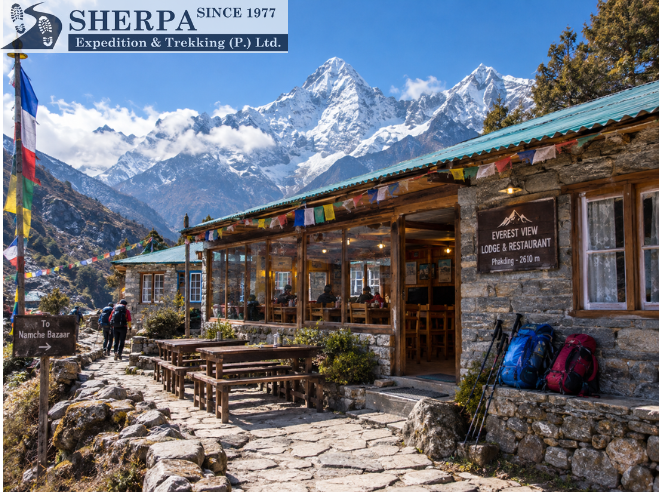
Teahouse accommodation on the Everest Base Camp Trek costs roughly ₹ 500–2500 per night depending on the village, room category, and lodge standard, although most guided packages already include twin-sharing accommodation.
Trail Area | Indicative Room Cost | Typical Standard |
| Lukla / Phakding | ₹ 500–1000 | Basic lower-trail teahouse |
| Namche Bazaar | ₹ 1000–2500 | Wider choice, including more comfortable lodges |
| Lobuche / Gorak Shep | ₹ 500–1000 | Basic high-altitude rooms |
Room-only pricing does not always increase in a straight line with altitude. Namche Bazaar has a broader range of higher-comfort properties, while remote stops such as Lobuche and Gorak Shep often operate basic rooms at relatively modest headline rates while earning more of their revenue from food and other lodge services.
This is why very cheap room prices can be misleading. Teahouses commonly expect guests to eat dinner and breakfast at the same lodge.
Guided packages normally include twin-sharing rooms. Single-room upgrades are easier to arrange at lower-altitude villages and can cost around ₹15000 across the route where availability permits.
Above roughly 4,000–4,500 metres, shared bathrooms become increasingly common, and single-room availability becomes more limited during busy trekking periods.
Kathmandu accommodation should be checked separately because some packages include pre- and post-trek hotel nights while others price them as an optional addition.
Food Cost for Indian Trekkers on the Everest Base Camp Trek
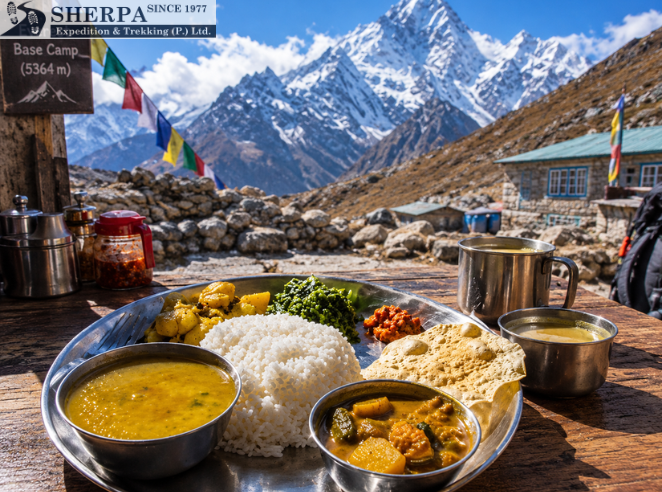
Food on the Everest Base Camp Trek costs roughly ₹ 2500–4000 per day at lower elevations and around ₹ 3500–5500 per day above 4,000 metres for independent trekkers, while guided packages commonly include three daily meals during trekking days.
| Food / Meal Type | Cost Position |
| Dal bhat | Usually one of the most practical local-value options |
| Chapati and vegetable curry | Common along much of the route |
| Momos | Widely available |
| Fried rice / noodles | Common teahouse dishes |
| Western dishes | Generally more expensive |
| Hot drinks | Cost rises with altitude |
Dal bhat is one of the most familiar and practical meals for Indian trekkers. It combines rice, lentils, and vegetables and is commonly available throughout the route, with refills offered at many lodges.
Food costs increase with altitude because ingredients and fuel become more expensive to transport into remote settlements.
Vegetarian food is widely available, but highly specific dietary requirements such as Jain food or complex allergy restrictions become harder to accommodate beyond Namche Bazaar. Those requirements are better communicated to the operator before the trek begins.
For travellers paying independently, choosing local meals rather than imported or Western-style dishes is one of the easiest ways to control the daily food budget.
Drinking Water Cost for Indian Trekkers on the Everest Base Camp Trek
Bottled drinking water on the Everest Base Camp Trek costs roughly ₹ 100–400 per litre, with prices generally rising toward the higher-altitude villages.
Gorak Shep and other remote upper-trail settlements normally sit near the higher end of the range because bottled supplies must be transported farther.
Trekkers can also use boiled or purified water, which is often cheaper than repeatedly buying bottled water. A reusable bottle combined with purification tablets or a suitable filter can reduce both trip cost and plastic waste.
Daily hydration requirements at altitude commonly reach around three to four litres. At that consumption level, relying exclusively on bottled water for a 12–14-day trek can become a meaningful expense rather than a minor purchase.
Travel Insurance Cost for Indian Trekkers on the Everest Base Camp Trek
Travel insurance suitable for the Everest Base Camp Trek costs roughly ₹3,000–₹8,000 for many Indian travellers, but the altitude and evacuation coverage matter more than the cheapest premium.
A normal international travel policy is not automatically suitable for Everest Base Camp. Many standard policies place limits on trekking or activities above approximately 3,500–4,000 metres, while Everest Base Camp sits at 5,364 metres and common itineraries can still reach higher viewpoints.
The policy should therefore specifically cover trekking to at least 5,500–6,000 metres and include emergency helicopter evacuation.
A helicopter evacuation from the Everest region can cost several thousand US dollars if the traveller is not adequately insured, making this one of the highest financial exposures on the trek.
Trekkers should confirm directly with the insurer that Everest Base Camp trekking and helicopter evacuation in Nepal are covered rather than relying only on a generic travel-insurance brochure.
Insurance is normally purchased before leaving India, and some trekking operators require evidence of suitable coverage before the trek begins.
Trekking Gear Cost for Indian Trekkers: Buy in India, Rent in Kathmandu
Trekking gear for the Everest Base Camp Trek costs Indian trekkers roughly ₹5,000–₹30,000 when buying essential equipment in India, while renting bulky cold-weather items in Kathmandu can reduce the initial spend substantially.
| Item | Better to Buy or Rent? | Reason |
| Trekking boots | Buy | Fit and break-in are important |
| Base layers | Buy | Personal-fit and skin-contact item |
| Daypack | Buy | Fit matters during long walking days |
| Thermal layers | Buy | Personal item |
| Down jacket | Rent or buy | Expensive and bulky for one trek |
| -10°C to -20°C sleeping bag | Rent or buy | Often only needed for high-altitude trips |
| Trekking poles | Rent or buy | Easy to rent locally |
| Duffel bag | Check package first | Frequently loaned by operators |
Kathmandu's Thamel district has extensive trekking-equipment rental options, with common rental prices around ₹ 100–400 per item per day depending on the item and quality.
For a first-time trekker, the most practical strategy is usually to buy items where personal fit matters and rent expensive bulky equipment that may see little use after the trip.
Package inclusions should also be checked before buying. Some operators loan sleeping bags, down jackets, and duffel bags at no additional cost.
Equipment quality requires attention in Kathmandu because both genuine and imitation branded trekking gear is widely available.
How Trekking Season Affects Everest Base Camp Trek Cost for Indians
Everest Base Camp Trek cost for Indian trekkers changes with the season because peak-season demand affects flights, guide availability, rooms, and package pricing.
Season | Conditions | Typical Cost Position |
| March–May | Stable trekking conditions, high demand | Peak pricing |
| June–August | Monsoon, more flight disruption | Can be lower |
| September–November | Clear views, high demand | Peak pricing |
| December–February | Very cold, quieter trail | Often lower |
Spring and autumn are the main trekking seasons. Package prices during the busiest weeks can run higher than shoulder- or off-season departures, although a fixed percentage premium should only be used when supported by current like-for-like operator quotes.
Autumn also overlaps with the major Dashain/Tihar period in Nepal and the wider Dussehra/Diwali travel season for many Indian travellers, which can contribute to demand.
Winter can offer lower prices and quieter trails but brings severe cold at altitude, with temperatures at higher stops potentially falling toward -20°C. The monsoon period can also cost less but increases cloud, rain, reduced visibility, and Lukla flight disruption.
Late October to early November and the first part of April can offer a useful compromise between weather, crowd levels, and price, although actual savings depend on the departure quote.
How Indian Trekkers Can Reduce Everest Base Camp Trek Cost
Indian trekkers can lower their Everest Base Camp Trek cost by sharing fixed costs, limiting unnecessary gear purchases, and comparing package inclusions rather than chasing the lowest headline quote.
- Join a scheduled group departure: This is usually the largest cost lever because guide, porter, and transport expenses are divided among more trekkers.
- Book through a licensed, government-registered Nepal trekking agency: Direct local pricing can avoid an additional intermediary margin.
- Compare Kathmandu and Ramechhap Lukla routings: When both are offered, the Ramechhap option may reduce the flight component, although the road transfer must also be included.
- Rent bulky equipment: A sleeping bag or down jacket can cost considerably less to rent than to buy for a single trek.
- Avoid unnecessary private porter costs: Travellers who are physically prepared may use shared porter arrangements rather than dedicated porter service.
- Book peak-season travel in advance: India–Kathmandu fares and popular departures can become more expensive closer to spring and autumn trekking periods.
- Compare inclusions rather than choosing the cheapest advertisement: A very low quote can exclude flights, permits, porter service, or full-board meals that later have to be added back.
Cost cutting should not come from unsuitable insurance, unsafe itinerary compression, or inadequate licensed guiding.
Total Everest Base Camp Trek Budget for Indian Trekkers From Major Cities
The total India-to-India Everest Base Camp Trek budget for Indian trekkers ranges from roughly ₹1,10,000–₹1,40,000 for a budget trip, ₹1,60,000–₹2,10,000 for a comfort-oriented trip, and ₹2,80,000–₹4,40,000 for a luxury or helicopter-assisted itinerary.
Departure City | Budget Trip | Comfort Trip | Luxury / Premium Trip |
| Delhi | Around ₹1,10,000–₹1,35,000 | Around ₹1,60,000–₹2,00,000 | Around ₹2,80,000–₹4,20,000 |
| Kolkata | Around ₹1,10,000–₹1,35,000 | Around ₹1,60,000–₹2,00,000 | Around ₹2,80,000–₹4,20,000 |
| Mumbai | Around ₹1,15,000–₹1,40,000 | Around ₹1,65,000–₹2,05,000 | Around ₹2,85,000–₹4,30,000 |
| Bengaluru / Chennai | Around ₹1,20,000–₹1,40,000+ | Around ₹1,70,000–₹2,10,000 | Around ₹2,90,000–₹4,40,000 |
These totals are different from the Nepal-side package price because they include the wider journey from India.
A complete India-to-India calculation can include the trek package, international flights, required permits, guide and porter support, insurance, trekking gear, trail extras, and personal spending.
Delhi and Kolkata travellers can often reach Kathmandu at a lower airfare than travellers departing from Mumbai, Bengaluru, or Chennai, so the starting city affects the full budget even when the Nepal-side trekking package is identical.
A 10–20% contingency reserve above the planned total provides room for flight disruption, an additional Kathmandu hotel night, unexpected equipment replacement, or other unplanned costs.
The India-to-India figure is therefore the more useful number for answering the practical question: “How much money do I actually need for the entire Everest Base Camp trip from India?”
What Determines Whether the Everest Base Camp Trek Offers Good Value for Indian Trekkers?
Value for money on the Everest Base Camp Trek depends on several factors beyond the headline price, especially package completeness, group size, service level, safety support, and the traveller's preferred level of comfort and flexibility.
A ₹75,000 package and a ₹1,00,000 package cannot be compared meaningfully until their flights, permits, meals, guide service, porter allocation, Kathmandu accommodation, and equipment loans are compared side by side.
Group departures normally provide the lowest per-person cost because fixed expenses are shared. Private departures cost more but provide custom dates, dedicated staff, and greater itinerary control.
Indian travellers also have some structural cost advantages. Geographic proximity keeps international travel comparatively manageable, Nepal entry is visa-free, and Indian citizens qualify for SAARC pricing on relevant government charges.
The strongest value therefore does not automatically come from the cheapest package. It comes from choosing a service level that covers the required logistics and safety support without paying for premium additions the traveller does not value.
Related Everest Base Camp Trek Cost Guides
Beyond the general cost breakdown above, several Everest Base Camp Trek costs need more detailed treatment by nationality or by individual service component. The following guides expand those subjects without repeating the full Indian-specific cost breakdown on this page.
What Does the General Everest Base Camp Trek Cost?
The general Everest Base Camp Trek cost guide covers the nationality-neutral cost structure, including package tiers, permits, Lukla flights, guide and porter services, accommodation, food, insurance, gear, and itinerary duration.
How Much Does the Everest Base Camp Trek Cost for Nepali Trekkers?
Nepali citizens pay different domestic permit and flight rates from Indian and other foreign trekkers, so their total Everest Base Camp budget requires a separate nationality-specific breakdown.
How Much Does the Everest Base Camp Trek Cost for Foreign Trekkers?
Foreign trekkers from outside SAARC countries pay the full foreign-rate Sagarmatha National Park fee and other applicable foreign-national pricing, creating a different overall cost structure from the Indian/SAARC budget.
How Much Do Guide and Porter Services Cost on the Everest Base Camp Trek?
A complete guide and porter cost breakdown covers daily staffing rates, porter-to-client ratios, licensing considerations, and tipping expectations in more detail than this nationality-focused page requires.
How Much Does Bottled Water Cost on the Everest Base Camp Trek?
The full village-by-village bottled water price breakdown shows how drinking-water costs change from lower villages to the highest overnight stops and compares bottled water with boiled and purified alternatives.
About the Author
